The car · the data package
A modern car is a computer that happens to have wheels
The engine is the least interesting thing about a new vehicle. The interesting part is the cellular modem, the sensors, and the account you signed up for — and how much of what they capture leaves the car.
A connected vehicle can generate a continuous, timestamped log of where it goes; a detailed record of how it’s driven — speed, hard braking, sharp acceleration, cornering; diagnostics and, for electric cars, when and where it charges; the voice commands and contacts synced from a paired phone; audio through the microphones used for hands-free calling and voice assistants; and video from exterior cameras and, on newer models, an interior camera pointed at the driver. Any one of these is mundane on its own. Together, and sent to a company’s servers, they describe your movements and habits in a way little else you own does.
Most new cars where these manuals agree
- Forward cameraTop of the windshield.Shown in: Model 3, Tucson, GV70, Civic
- Grille cameraOn the grille, on cars with a 360° view.Shown in: Tucson, GV70, Telluride
- Side camerasUnder the side mirrors, on cars with a 360° view.Shown in: Tucson, GV70, Telluride
- Rear cameraAbove the license plate.Shown in: Model 3, Tucson, GV70, Telluride
- GPS antennaIn the roof’s shark fin.Shown in: Tucson, Sorento
- MicrophonesIn the overhead console.Shown in: Tucson, a Ford patent
- Driver cameraIn front of the driver; the exact spot varies by maker.Shown in: Model 3, GM, Tucson, Ford
Also on board, not drawn
- Your phoneContacts and calls, once you pair it.
- Crash recorderSpeed and braking in the seconds around a crash, inside the airbag control module.
When the Mozilla Foundation reviewed 25 major car brands against a basic privacy standard in 2023, every single one failed — the worst result the group had recorded for any product category it had ever examined.1 In that review, about 84% of the brands reserved the right to share or sell personal data, and roughly 92% gave drivers little or no real control over what their cars collect; none met Mozilla’s standard for handling government and law-enforcement requests, and some brands’ own policies claimed the right to gather categories as sensitive as health or sexual-activity data.1 The point isn’t that every clause is exercised. It’s that the default, spelled out in the fine print, runs toward collection and sharing rather than away from it.
The car · the camera inside
The newest cars watch the driver, not just the road
Driver-monitoring cameras are spreading fast, sold as a safety feature. The trouble is what happens to the footage once it exists.
Many current models — including Tesla’s newer cars and the driver-assist systems in vehicles from Ford and GM — carry a camera mounted in the cabin, facing the driver. Makers generally say this footage stays in the car unless you opt in to sharing. That assurance did not always hold. Reuters reported that between 2019 and 2022, groups of Tesla employees privately shared sometimes highly invasive images and clips recorded by customers’ car cameras through an internal messaging tool — and that although the company described such recordings as anonymous, the tool could in some cases show where a recording was made.2
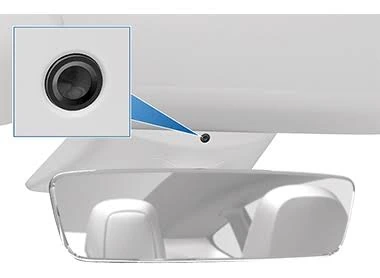
The microphones raise a quieter version of the same problem. A car’s hands-free and voice-assistant hardware is sensitive by design, and wake-word systems can misfire — a failure mode already documented on phones and smart speakers, where accidental activations captured private moments that human reviewers later heard. The mechanism carries over directly to any car with an always-listening assistant. The through-line for both the camera and the microphone is simple: once a device is built to record you and connect to someone else’s servers, its safety depends entirely on a company you have to trust to get it right.
What happened · the proven case
One automaker sold drivers’ data straight to their insurers
This isn’t a hypothetical about what a car could do. It is a documented case, with regulators on the record and drivers who saw the bill.
General Motors, through its OnStar service and a feature called Smart Driver, collected precise location and driving-behavior data from millions of connected vehicles and sold it to the data brokers LexisNexis Risk Solutions and Verisk, who packaged it for insurers.3,4 Many drivers never understood they were enrolled, and some found their premiums rising because of data GM had sold about how they drove — even though the company had told OnStar subscribers it would not sell their driving or location data.4 After news reporting exposed the practice, GM discontinued Smart Driver in 2024.
The enforcement followed. In January 2026 the Federal Trade Commission finalized an order barring GM from sharing geolocation and driver-behavior data with consumer reporting agencies for five years and requiring it to obtain affirmative consent for connected-vehicle data for twenty — the agency’s first order aimed specifically at connected-car data, which it called an egregious betrayal of consumers’ trust.3 In May 2026 California’s attorney general and several county prosecutors reached a separate $12.75 million settlement — the largest under the state’s privacy law to date — requiring GM to delete the retained data within 180 days; the program had earned GM roughly $20 million nationwide.4 Other states have opened similar inquiries into other automakers, because the underlying data, and the incentive to sell it, are not unique to one company.
The law · United States
In the US, almost none of the watching is required
The striking thing about American car surveillance is how little of it the government mandates. The modem, the tracking, the driver camera — those are the manufacturer’s choice, not the law’s.
Federal rules require a rear backup camera on new passenger vehicles, in effect since May 2018, but it only shows the driver a live image; it does not record or transmit. Event data recorders — the “black boxes” that log speed and braking in the seconds around a crash — sit in the large majority of new cars, but by industry practice rather than federal mandate. The cellular modem that makes a car “connected” is likewise a manufacturer decision, driven by the value of the data and the services it enables. That is why, in the US, the story is enforcement after the fact — the GM case — rather than a rule written in advance.
One mandate is on the horizon. Section 24220 of the 2021 infrastructure law directs the National Highway Traffic Safety Administration to write a standard requiring passive impaired-driving prevention technology in new passenger vehicles — systems that monitor the driver without any action on their part, using approaches like an infrared camera tracking eye movement, steering-wheel sensors, or software watching for erratic driving.5 The agency’s deadline to finalize that rule was November 2024. It passed: as of late September 2026, NHTSA had published only an advance notice, gathered more than 18,000 public comments, and remained at the comment-analysis stage, with no proposed rule.6 Because the law allows the deadline to slip and gives makers years to comply once a rule is final, the first cars fitted with mandated impairment monitoring are unlikely before the end of the decade.
The law · European Union
In the EU, the watching is now written into the rules
Europe moved earlier and further. A new car sold there today is legally required to carry hardware that a US buyer only receives by the maker’s choice — though the rules also put limits on what that hardware may keep.
Since March 2018, the eCall regulation has required every new car type in the EU to carry a cellular modem and GPS that automatically dial the emergency number 112 and report the vehicle’s location in a serious crash.7 The system can’t be removed from a new car, which means a permanent cellular radio now sits in every one. Notably, the regulation limits eCall data to handling the emergency and requires it to be deleted afterward — the mandate is the hardware, with a guardrail on this particular use.7
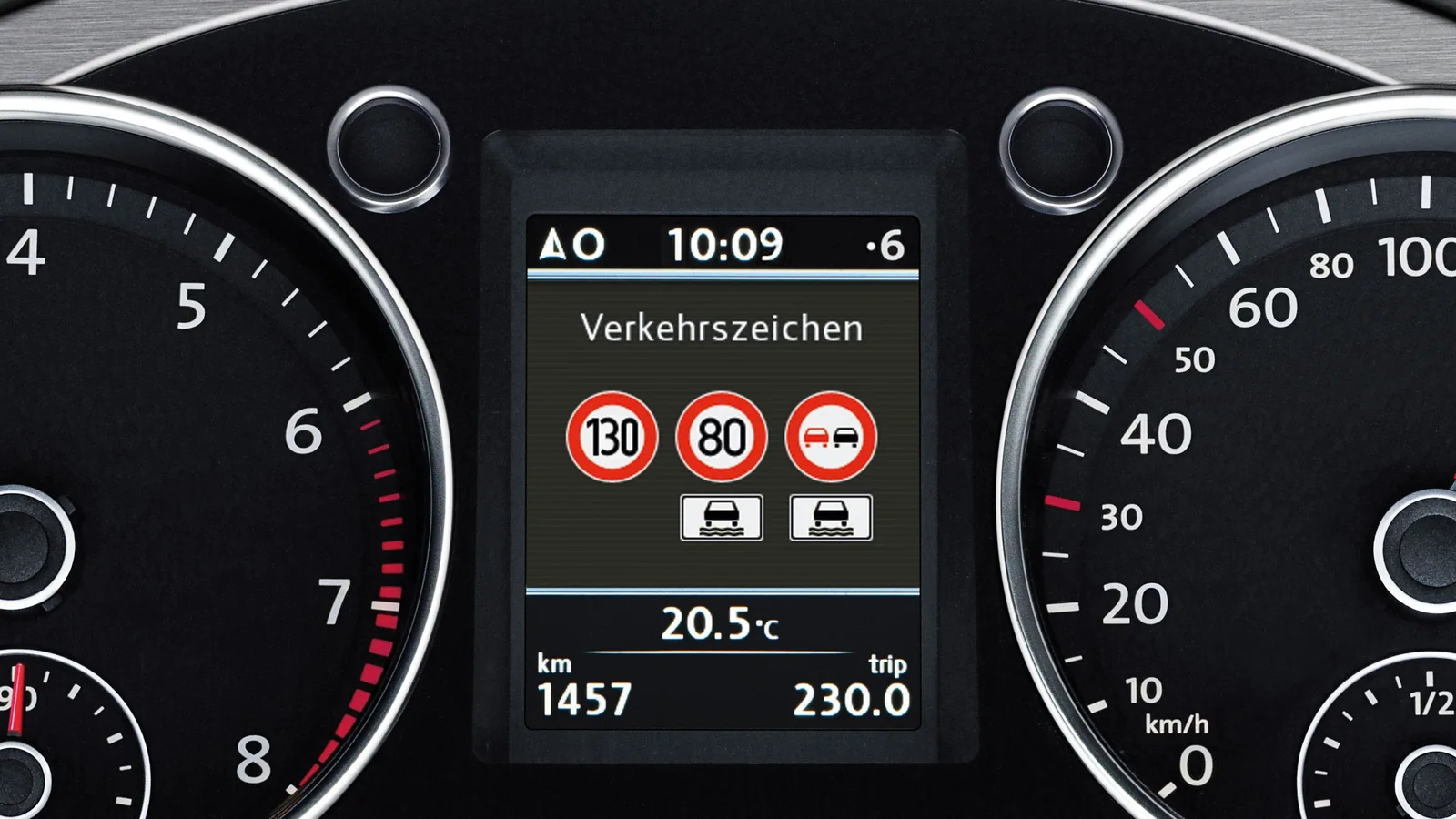
The broader step is the General Safety Regulation, known as GSR2. Since July 2024 it has required new cars to include intelligent speed assistance, which uses GPS and map data to monitor the vehicle’s speed against the posted limit; driver drowsiness and attention warning; an event data recorder; automatic emergency braking; and lane-keeping. From 7 July 2026, every newly built car must also carry an advanced driver-distraction warning system — a camera that watches the driver’s face and eyes.8 Several of these systems reset to on each time the car starts and cannot be switched off for good. The regulation does pair the mandate with data limits: the driver-monitoring systems must run “closed-loop” — processing inside the car, not retaining footage, not sharing it with third parties, and deleting it after use — and the event recorder is required to be anonymized.8 The civil-liberties question those rules don’t settle is the hardware itself: a driver-facing camera and an always-present modem are now standard equipment, and hardware installed for one purpose can be pointed at another by a later rule or a future owner of the data.
Put simply: in the US the watching is mostly the maker’s choice; in the EU it is increasingly the law’s requirement — and the US is drifting toward the European position, one proposed rule at a time.
The thread
You own the car. You don’t control the car.
Whether the watching arrives by a company’s decision or by statute, the shape is the same — and it’s the same shape as the cameras on the street and the devices in your home.
A car is sold once, but the data it generates is a stream that runs for the life of the vehicle, and a stream is worth more than a single sale. That is the plain reason connectivity is now standard even on buyers who never asked for it. The thing recording you runs someone else’s software on someone else’s terms, and you have the least say of anyone in the arrangement — the same pattern our cameras & sensors page traces through doorbells and televisions, and the same legal machinery that our page on who sees your data lays out for anything you give a company.
Where we come in
What you can actually do
You can’t un-install a mandated system, and you can’t rip the modem out of a car under warranty. But the exposure is not all-or-nothing, and some of it is decided in public.
Start with your own car. Open its app and account settings and look for the data and privacy controls — features with names like a “driving score” or usage-based insurance are the exact vector GM used, so treat any free driving-feedback add-on with suspicion and turn off sharing you don’t want. Be aware that opt-outs are often buried or weak, which was part of the GM finding, so it’s worth checking rather than assuming. Where the law gives you a right to your data — as California’s privacy law does — you can request what a maker holds and ask that it be deleted. When you’re buying, remember that a less-connected or older vehicle simply collects and transmits less, and that any car with a cellular modem can send data whether or not you use its connected features. And because the US path runs through public rulemaking and enforcement rather than a fixed mandate, the impaired-driving standard and how automotive data gets regulated are still open questions worth weighing in on — which is the whole reason this club works on both the personal side and the public one.
The paper trail
How the law got here
The two systems diverged over eight years — Europe writing the watching into its safety code, the US arriving at the same place through enforcement and a rule that keeps slipping.
-
March 2018EU The eCall mandate takes effect: every new car type must carry a cellular modem and GPS that auto-dial 112 in a crash. A permanent radio now sits in every new EU car.
-
May 2018US The federal backup-camera requirement takes effect for new passenger vehicles — a display-only safety device that does not record or transmit.
-
2019EU The General Safety Regulation (GSR2) is adopted, setting the framework for speed assistance, driver monitoring, event recorders and more.
-
November 2021US Section 24220 is signed into law, directing NHTSA to require passive impaired-driving monitoring in new vehicles.
-
April 2024US GM discontinues its OnStar Smart Driver feature after news reporting reveals it sold drivers’ data to brokers and insurers.
-
July 2024EU GSR2 applies to all new car registrations: speed assistance, drowsiness warning, event recorders and lane-keeping become standard equipment.
-
November 2024US NHTSA’s statutory deadline to finalize the Section 24220 rule passes with no rule issued.
-
January 2026US The FTC finalizes its order against GM and OnStar: a five-year ban on sharing driving data with reporting agencies and a twenty-year consent requirement.
-
May 2026US · CA California reaches a record $12.75 million settlement with GM over the same data sales, and orders the retained data deleted.
-
July 2026EU A driver-facing distraction-warning camera becomes mandatory on every newly built EU car.
-
September 2026US The Section 24220 impaired-driving rule is still at the comment-analysis stage — no proposed rule published.
Receipts
Every claim, sourced
We link primary sources wherever we can — the regulators’ own orders, the official regulation texts, and the researchers’ findings — and we state each side’s position. Where a claim is contested or the rules cut both ways, we say so in the text.
Sources8 references
- Mozilla Foundation — *Privacy Not Included review of 25 car brands (2023): every brand reviewed earned a warning label, the worst result for any product category the guide had examined; most brands reserve the right to share or sell data, most give drivers little control, none met the standard on government and law-enforcement requests, and some policies claim rights to sensitive data. mozillafoundation.org
- Reuters — investigation reporting that between 2019 and 2022, Tesla employees shared sensitive images and videos recorded by customers’ car cameras through an internal tool, which in some cases could show a recording’s location despite the company describing the footage as anonymous. reuters.com
- Federal Trade Commission — final order (January 14, 2026) settling allegations that GM and OnStar collected and sold precise geolocation and driving-behavior data without informed consent: a five-year ban on sharing that data with consumer reporting agencies and a twenty-year affirmative-consent requirement. ftc.gov
- California Attorney General — announcement of a record $12.75 million settlement with GM (May 8, 2026) over the unlawful sale of drivers’ location and driving data to the brokers LexisNexis and Verisk; GM must delete retained data within 180 days, and the program earned roughly $20 million nationwide. oag.ca.gov
- National Highway Traffic Safety Administration — Section 24220 of the Infrastructure Investment and Jobs Act directs NHTSA to issue a safety standard requiring passive advanced impaired-driving prevention technology in new passenger vehicles. nhtsa.gov
- State of Surveillance — status review finding that NHTSA missed its November 15, 2024 deadline and, as of June 2026, had published only an advance notice (January 2024), collected 18,367 comments, and remained at the comment-analysis stage with no proposed rule. stateofsurveillance.org A September 27, 2026 update found the rule still at the pre-proposal stage on the federal regulatory agenda, with the next step, analyzing comments, dated October 2026. stateofsurveillance.org
- EUR-Lex — Regulation (EU) 2015/758 (eCall): a 112-based in-vehicle system with a cellular modem and GPS is mandatory on all new car types from 31 March 2018, and personal data processed by the system is limited to handling the emergency and deleted afterward. eur-lex.europa.eu
- EUR-Lex — Regulation (EU) 2019/2144 (General Safety Regulation, GSR2): mandates intelligent speed assistance, driver drowsiness and attention warning, event data recorders, automatic emergency braking, and (for all new vehicles from 7 July 2026) advanced driver-distraction warning; the monitoring systems must run closed-loop without retaining or sharing data, and the event recorder must be anonymized. eur-lex.europa.eu
Get involved
It’s free, open to everyone at Pitt, and joining takes about a minute.
No dues, no experience needed. Come to a meeting, or leave your name and we’ll tell you when the next one is.